Built for India first
Real OPD density, Hinglish ambient drafts, bilingual Rx paths, and clinic workflows that match how care already runs — not a Western EMR relabelled.
Local product DNASentia is an event-sourced, consent-bound Healthcare OS — ambient consult, Clinical Canvas Patient 360°, lab, pharmacy, and patient companion on a single FHIR-native graph.
Sentia is built in India for Indian care — ABHA-ready identity paths, DPDP-aligned consent, FHIR R4 on an event-sourced kernel, and offline-tolerant clinics from metro OPD to tier-2 floors. Self-reliant infrastructure: Indian clinicians own the sign-off; patients own the stream.
Real OPD density, Hinglish ambient drafts, bilingual Rx paths, and clinic workflows that match how care already runs — not a Western EMR relabelled.
Local product DNAIdentity and linking ports sit on the Healthcare Cloud layer so beachhead clinics can grow into India’s digital public goods stack without a second patient truth.
Digital public goodsConsent-bound reads, revoke-means-revoke Companion controls, and kernel enforcement — patient agency as system design, not a privacy PDF afterthought.
Data sovereigntyTablets keep working when the tower doesn’t. Sync lands losslessly on return — essential for India’s uneven connectivity reality.
Tier-2 / tier-3 readyFHIR R4 gateway, append-only events, one graph for doctor · nurse · lab · pharmacy · companion — no siloed “modules” inventing parallel charts.
Interop, not lock-inAmbient drafts stay advisory. Licensed professionals sign. Indian clinical judgement remains the authority — AI never auto-writes the chart.
Human in the loopBuild a Health OS India can trust — secure by default, consent-bound by design, open where it should be open, and honest about what is live today (R1–R7) versus what is still on the road (R8–R10).
Real clinic friction — not abstract “digital transformation.” Each persona maps to a live role in the app.
“I’m typing notes while the patient is talking — and still finishing charts after OPD.”
“I don’t know who can still open my file after last year’s hospital stay.”
“Vitals and tokens never land where the doctor actually looks.”
“Lab, pharmacy, and OPD are three products that don’t agree.”
Ambient voice feeds the doctor. Events feed the graph. The cloud substrate holds identity and consent — so lab, pharmacy, and companion never invent a second truth.
Doctor Workspace and Patient Companion are the wedge. Nurse, reception, lab, radiology, and pharmacy share the same graph — never a second chart.
Listen → AI SOAP draft → human sign. Edit distance tracked. Nothing enters the kernel unsigned.
Vitals, diagnosis, meds, lab alerts, filtered timeline, risk rail, care team, sticky notes.
Patient-owned streams. TREAT grants gate every clinical read and write. Revoke is real.
Entity DNA, search, twin status over the event log — intelligence without PHI in ops views.
Flag-only interaction checks against active meds. Clinicians stay in control of prescribe.
Clinic dispatcher, demo reminders, tablet sync when connectivity returns.
Watch care events flow the kernel. Seed password sentia-demo · every step is the same patient fabric.
Front desk registers the patient, grants clinic consent, and issues a token. No clinical detail on the desk surface — the kernel holds the stream.
Pick a role at the app door. Each card opens the live product — same kernel, same patient stream, ambient + consent throughout.
Canvas · ambient consult · orders · DNA · Rx check
Open workspace →Own · share · revoke · journey · plain language
Open companion →Acuity board · multi-vitals → shared stream
Open nurse →Tokens · check-in · consent at the door
Open desk →Open queue · structured H/L results
Open lab →Modalities · structured reports
Open radiology →Search · select all · batch dispense
Open pharmacy →Facility twin · marketplace · cloud catalogue
Explore scaffolds →All live roles share the event-sourced kernel · ambient drafts stay unsigned until a human confirms.
Cloud substrate · OS graph & events · experiences that never invent a second source of truth — mapped like a brain: cortex, nerves, substrate.
Flutter Doctor Workspace, Companion, care roles — same public API, role-bound sessions, premium clinical chrome. Ambient voice lives here; signing commits to the kernel.
Event fabric, FHIR projections, Healthcare Graph, AI runtime, follow-up reflexes, offline sync — the pathways signals travel.
Identity (scrypt + HMAC), storage, ABHA ports, secure transport, multi-tenant path — the base everything stands on.
Built for clinical safety and Indian compliance posture — mechanics, not checkbox theatre. Four seals around the clinical kernel.
Never cleartext. Never logged. Minimum length enforced on register. Demo seeds use a known password only for evaluation.
Role and subject bound — cannot forge another clinician’s principal or mint arbitrary roles on the wire.
API JSON bodies encrypt after login for the 8-hour session window — live timer and auto sign-out.
Kernel enforces TREAT grants. Revoke in Companion unlocks only when granted again — not policy theatre.
Real voices from the clinic floor — the friction ambient scribe, consent, and one kernel are built to remove.
I need the consult to write itself so I can look at the patient — not the keyboard.
Doctor Canvas, then cross-role: reception → nurse → doctor → companion.
Open demo guide → 📖OPD rush, triage board, patient revoke, pharmacy batch — in plain language.
Read use cases → ⚖Side-by-side capability table — and what this evaluation build is not claiming yet.
Compare →Evaluation guidance — not legal advice. Query the kernel; answers stream like a sealed read.
No. Ambient drafts are advisory. A licensed user must sign before events enter the kernel.
From registration tokens to signed notes and pharmacy queues, Sentia keeps one story of the patient. Ask Ayush (bottom-right) can walk you through roles, security, and how to open the live app.
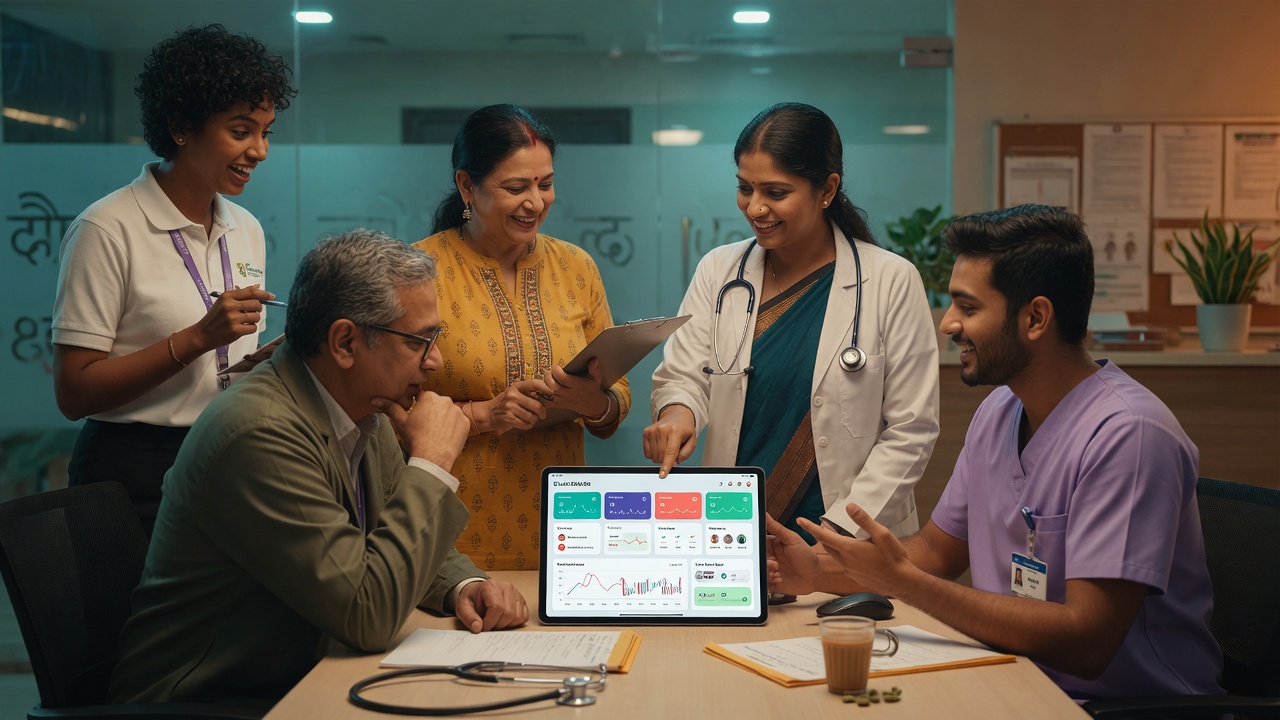
Launch the Sentia OS web app to explore the full clinic day — Doctor Canvas, ambient consult, and care roles on one kernel.